Blog / Multi-Sport Court Surfacing

Transform Your Game: Professional Sport Court Marking

sports court repair and markings

If you want your court to play better and look sharper, professional marking will make a huge difference. At PowerSurge Plus, we can do reliable sport court marking for Montgomeryville, PA homeowners and facilities, with results that'll hold up to regular use. 

How We Do Sport Court Stripping in Montgomeryville, PA

You've probably noticed how a court with crisp, bright lines just feels more inviting. Good lines will guide player movement, and this reduces arguments over boundaries and makes the space safer overall. Faded or messy lines can cause trips, missteps, or frustration that pulls everyone out of the flow. 

Here's how we go about getting this done for you:

First Things First

First we check for cracks, low spots, or areas where water pools, because those problems can affect how the new lines perform. If we fix those now, you'll end up with a court that drains better and stays playable for a lot longer. Before any fresh marking goes down, any old or faded lines should usually be removed so the new paint bonds cleanly and lasts longer. 

Skipping this step will often cause you to end up with bleeding colors, uneven edges, or lines that wear off too fast. But you also want to handle this carefully to avoid damaging the court base, which is why you'll want asphalt professionals on the job. 

Finally, surface prep is where the real work happens. We'll clean the area very thoroughly to get rid of all the dirt, leaves, mold, or old residue. Good cleaning alone can make a tired court look years younger before any paint even touches it!

Measuring and Layout

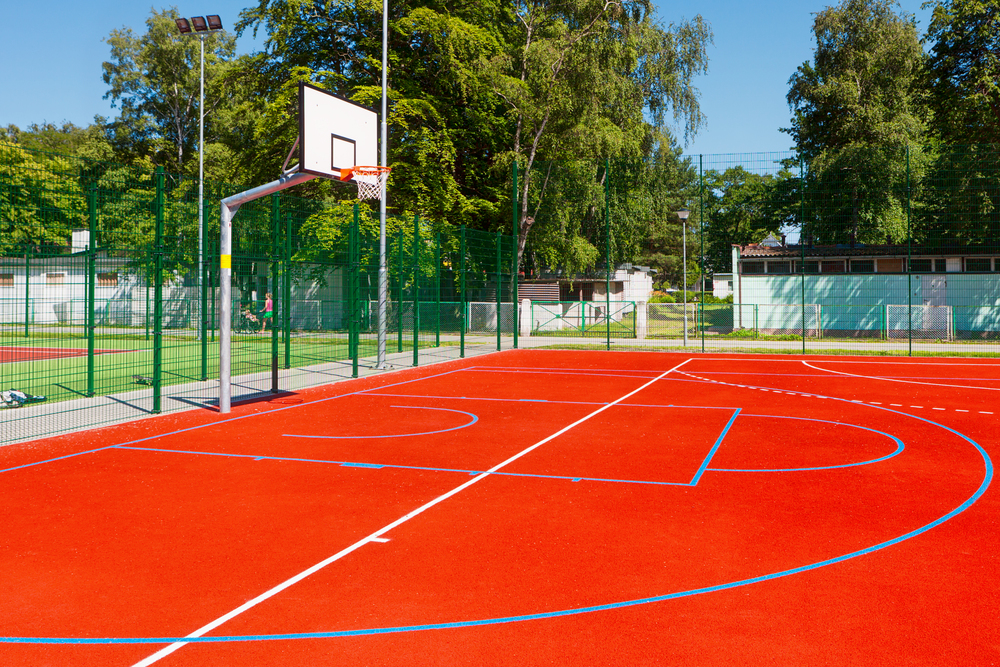
Next, we'll use precision tools and templates to get every line exactly where it belongs. For basketball, for example, you need accurate three-point arcs, free-throw lines, and keys. Tennis requires regulation baselines and sidelines. For pickleball fans, precise markings are extra important because the smaller court means that every line counts for positioning and shots. We know you want all this done right the first time!

Multi-sport courts are also very popular because they allow one surface to support basketball, tennis, and pickleball with overlapping or convertible lines. We know how to design these setups so the lines don't clash. Talk to us about this if you're interested, as this can make limited space more flexible.

Application

Now it's time to paint, and we lay down high-quality paints and coatings designed for sports surfaces to resist fading, cracking, and heavy foot traffic. These materials often include a bit of texture, too, so players can get good traction. Instead of just doing one thick layer, it's often better to do multiple thin coats. This helps everything cure evenly and wear better.

Talk to Us About Sport Court Stripping

Ready to give your court the upgrade it deserves? Reach out to our team here at PowerSurge Plus in Montgomeryville, PA or give us a call at 267-827-2199 to get a quote. We've been serving PA and the Tri-State area since 1998.

Posted in:

Related Posts

Philadelphia Sport Court Surfacing by PowerSurge Plus.

How to Choose the Right Surface Material for a Multi-Sport Court

If you're putting in a sport court, one of the first hiccups you'll run across is deciding what type of surface material you need. If you're talking about a dedicated court, the answer's pretty simple; but what about your Philadelphia, PA multi-sport court surfacing? Making Sport Court Surfacing Choices for Philadelphia, PA Multi-Sport Use 1. Player Safety Comes First The first and most important consideration is the safety of the players. If you get the proper grip on the court surface, this will minimize slips and falls, especially after rain. But you also want materials that can absorb shock well enough to protect player joints. Whatever you decide upon, always keep safety as your number one consideration. 2. Weather Matters If your court is outdoors, then it's constantly exposed to weather and extreme changes in weather. During the summer, it might be exposed to intense sunlight, and those UV rays are going to degrade the surface. You can mitigate this somewhat with the right tree cover, but what you can't really mitigate is rain or frost. So whatever material you choose, it has to be able to handle these kinds of extreme conditions if it's outdoors, and you'll also want to be sure to put in proper drainage. 3. Consider Pros and Cons of Different Materials Asphalt Asphalt is a very popular choice. It's cheap, it's flexible, and it's got good grip. On the downside, you will have to upkeep it constantly to prevent cracks, and if you don't do this, those cracks will soon become holes, and pretty soon you'll have a useless court. Concrete Concrete is another popular choice, especially for durability. It lasts, which is really its main plus, and if you put some protective layers over the top of it, you can get good grip. However, it's definitely not good for impact sports. If you anticipate players using it for impact sports regularly, then you'll want to add some cushioning layers on top. Polyurethane Polyurethane is best for indoor courts. It's not particularly suitable for the outdoors, but if your court is inside, this might be the best choice because of its shock-absorbing ability and overall durability and comfort. Artificial Turf Artificial turf is meant to replicate the feel of grass but without any of the intense care that goes into trying to keep grass growing. The downside is that artificial turf can sometimes be too grippy, and with the wrong shoes, your football, field hockey, or soccer players are likely to see more twisted ankles and damaged knees. Getting the right shoes does help deal with this, and the good news is that turf is a very cushioned surface if you're dealing with sports that involve a lot of falls. Acrylic Acrylic works both indoors and outdoors and is popular with tennis and basketball courts. It can be made in whatever color you like, it's really quite durable, and it offers decent grip and pretty good cushioning. For help in choosing wisely for your sport court, contact PowerSurge Plus in Lansdale, PA. We've been serving Philly, all of PA, and the larger tri-state area since 1998.

driveway sealing company in Montgomeryville, PA.

How Can Suburban Property Owners Protect Their Driveways from Seasonal Wear?

For suburban property owners in Montgomeryville, PA, staying ahead on asphalt maintenance helps driveways stand up against the seasonal wear and tear we get here. Our freeze-thaw cycles, summer heat, spring rains, and fall leaf cover all take their turn hammering your pavement, but you can keep damage in check with consistent care. Protecting Your Montgomeryville, PA Driveway Inspect It Start by getting into the habit of walking your driveway every few months and looking for things like surface fading, minor cracking, or areas where water is pooling after rain. These small clues tell you the pavement is starting to break down. Clean It Use a stiff broom or leaf blower to clear away dirt, leaves, and gravel that can trap moisture or grind into the surface over time. A quick hose-down removes oil stains or salt residue before they eat away at the binder in the asphalt. Sealcoat It We'd recommend applying a fresh sealcoat every two to three years, ideally in late spring or early fall. This coating is a shield that blocks ultraviolet rays and fills in any tiny surface voids so water can't get in. Treat It Carefully If you handle snow removal yourself in winter, stick to plastic shovels or snow blowers with rubber blades. Metal shovels can chip the surface and create entry points for future damage. When choosing de-icers, go easy on that rock salt, as it's very hard on asphalt. Safer options like calcium magnesium acetate or plain sand will give you some traction without harming the pavement as much. In hot summer weather, avoid making sharp turns or letting heavy vehicles sit in the same spot for long periods. The asphalt softens under the heat and can develop ruts or depressions. Address Seasonal Wear Winters here can bring repeated freeze-thaw cycles that pry open small cracks in your pavement and break them open into big holes. You can combat this a bit by removing snow as soon as it falls rather than letting it pack down and melt slowly. Once the melt hits, sweep away any remaining sand or salt as soon as you're able. In summer, the heat bakes the oils out of the asphalt, and the only real way to protect against this is with a fresh sealcoat. Fall is the perfect window for one last deep clean. Rake away leaves immediately, as wet leaves hold moisture against the pavement and can stain or soften it in spots. Check for any low spots where water might collect and add a bit of fill or adjust the grading if it's needed. Call Us for Quality Asphalt Maintenance Ready to stop those small openings before they grow? Contact us at PowerSurge Plus today. Our local knowledge of this region and its weather, plus our experience and flexible approach that fits around your schedule, will ensure your pavement stays in great shape year after year. We serve all of Bucks and Montgomery Counties, Philly, and the entire Jersey, Delaware, and Pennsylvania regions.

Asphalt Patch Work Contractors in Philadelphia County.

What Are the Most Durable Materials for Asphalt Patch Work in High-Traffic Areas?

Doing asphalt patch work in high-traffic areas requires using materials that can handle constant, heavy loads as well as the environmental stresses we get here in Philadelphia, PA, like temperature fluctuations. The Most Durable Materials for Asphalt Patch Work in Philadelphia, PA 1. Hot Mix Asphalt This is a heated blend of asphalt binder and aggregates that's applied while hot. The heat lets it bond with existing pavement, and this makes the repair particularly strong. HMA is resistant to deformation under heavy traffic and is the best choice for permanent repairs. It can last 15–30 years with proper application and is less prone to cracking or rutting compared to colder alternatives. HMA highly recommended for areas with temperature fluctuations, too, as it creates a smooth, resilient surface that can also handle thermal expansion. The main downside here is that you'll need professional equipment to do a hot patch, and the project is also weather-dependent. It's best to apply it only in dry, warm conditions, meaning if you have a mid-winter emergency need, this might not be the choice. 2. Polymer-Modified Asphalt This is a specialized mix of polymers that's added to standard asphalt to enhance its properties. It offers greater flexibility, water resistance, and adhesion and gives you patches that are more resistant to cracking, weathering, and heavy loads. This material can actually extend patch life significantly over just using traditional asphalt. It's excellent for harsh environments or high-volume areas, and it reduces rutting and provides a stronger bond for the hot patch. The main drawback is cost: expect this to cost noticeably more than basic asphalt. 3. Cold Mix Asphalt with Polymer Additives This patch is a pre-mixed, room-temperature asphalt that includes polymer adhesives for better curing and bonding. It's not going to last as long as hot mixes, but, on the plus side, polymer-enhanced cold patches harden quickly and resist water and temperature changes. The best time to use this for a high-traffic area is when you are constrained by weather, as this patch offers quick fixes in any weather. It's generally less durable than hot options for extreme high-traffic and best used as a temporary or supplementary solution. When you choose your patch material, be sure to consider factors like our climate, the overall traffic volume you have to deal with, and your budget. For the most durable results in places that see a lot of traffic, we're usually going to recommend that you go with hot asphalt or even a polymer-modified option, as they are the most durable solutions and offer the best performance. However, a lot is going to depend on the weather, your budget, and the urgency of the repair. For a fast fix, a cold patch might be just the thing. Whatever your needs, call us now at PowerSurge Plus for a quote. We're full-service residential and commercial asphalt maintenance contractors who've been servicing Philadelphia, PA, and the whole tri-state area since 1998.